Watched, Sorted, Contained: Digital Platforms and the Expansion of Carceral Logic
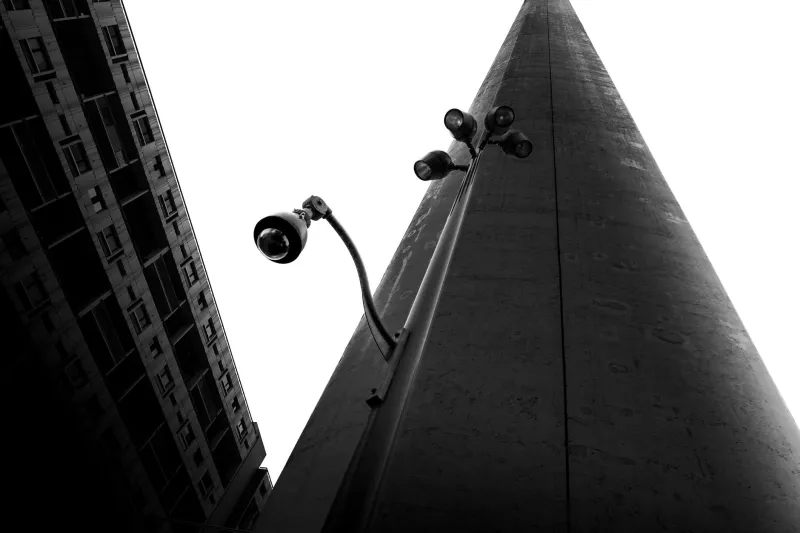
There is a particular kind of visibility that does not liberate. It watches, categorizes, and holds. It assigns risk scores, infers intent, and routes individuals through systems designed not to understand them but to manage them. This is the visibility that Michel Foucault identified at the heart of modern disciplinary power—and it is, increasingly, the visibility that structures life online in the United States and beyond.
The emergence of surveillance capitalism as a dominant economic logic has prompted a growing body of critical inquiry. Yet much of that inquiry remains tethered to a framework of consumer privacy—a liberal register concerned primarily with individual rights and corporate overreach. What happens when we bring a different theoretical tradition to bear? When we read the architecture of data extraction not through the lens of privacy law but through the critical theories of incarceration, abolition, and carceral geography?
The results are, to say the least, illuminating.
The Panopticon, Reconstructed
Foucault's account of disciplinary power in Discipline and Punish (1975) remains one of the most generative frameworks in the critical theory canon. The panopticon—Jeremy Bentham's design for a prison in which inmates could never be certain whether they were being watched—served Foucault as a figure for a broader social transformation: the internalization of surveillance as a mechanism of self-regulation. One need not be watched at every moment if one believes one might be watched at any moment.
The behavioral modification this produces is not incidental to the system; it is the system's purpose.
Digital platforms have reconstructed this logic at extraordinary scale. A user who knows—or suspects—that their search queries, location data, purchase history, and social connections are being aggregated and analyzed begins to modulate behavior accordingly. The chilling effect, so often discussed in the context of free speech and government surveillance, operates with equal force in the commercial domain. You do not search for certain things. You do not click on certain links. You perform a version of yourself calibrated for an audience you cannot see but whose gaze you have thoroughly internalized.
This is Bentham's prison, rebranded as a free service.
Gilmore's Geography and the Sorting Machine
If Foucault provides the theoretical architecture, Ruth Wilson Gilmore supplies the political urgency. In Golden Gulag (2007) and her broader abolitionist scholarship, Gilmore defines racism as "the state-sanctioned or extralegal production and exploitation of group-differentiated vulnerability to premature death." Her framework insists that carceral systems are not aberrations from an otherwise just social order; they are expressions of that order's deepest organizing logics—logics that sort populations, allocate risk, and determine whose life is invested in and whose is managed or discarded.
This framework travels into digital space with troubling ease.
Algorithmic systems do not merely observe; they sort. Credit scoring algorithms, predictive policing software, content moderation systems, and ad-targeting infrastructures all engage in the production of what we might call digital carceral geography: the mapping of users onto categories that determine access, opportunity, and exposure to harm. Researchers have documented how these systems reproduce and amplify racial disparities—denying mortgage advertisements to Black users, routing job listings away from women, flagging the speech of marginalized communities at higher rates than that of dominant groups.
The platform does not see a person. It sees a risk profile. And the distribution of those risk profiles is anything but neutral.
Complicity and the Self-Surveilling Subject
One of the more unsettling contributions of abolitionist critical theory is its refusal to locate harm exclusively in formal institutions. The carceral state is sustained not only by prisons and police but by the everyday practices, assumptions, and investments of ordinary people who benefit from—or simply accommodate—its operation. This insight, developed across the work of scholars including Angela Davis, Mariame Kaba, and Dylan Rodríguez, demands that we examine not only the architecture of surveillance but the subjectivity it produces.
Consumer technology has been extraordinarily effective at recruiting users as agents of their own surveillance. The fitness tracker that monitors sleep and heart rate, the smart home device that records ambient sound, the social media profile that archives a decade of disclosed preferences and relationships—each of these involves a form of voluntary self-disclosure that feeds the very systems from which users might wish to be protected. This is not simply a matter of ignorance or deception, though both are present. It reflects the depth of the ideological work that has made self-quantification feel like self-care and data sharing feel like social participation.
The platform has convinced us that being watched is a feature, not a condition of unfreedom.
Abolition-Adjacent Resistance: What Does It Look Like?
Abolitionist frameworks are not primarily concerned with reforming existing systems; they are oriented toward dismantling the conditions that make those systems necessary and replacing them with structures that support life rather than manage it. Translated into the domain of digital surveillance, this orientation resists the impulse to simply regulate data brokers or strengthen privacy policies—important as such measures may be—and asks a more fundamental question: what would it mean to build digital infrastructures that do not require the extraction and monetization of human behavior?
Practical gestures toward this vision are already being theorized and practiced. Data minimization as a design ethic, community-controlled platforms, federated social networks that decentralize ownership, and the organized refusal of surveillance technologies by specific communities all represent what we might call abolition-adjacent digital practice. None of these constitute a wholesale transformation of the political economy of the internet. But they enact, in small and sometimes fragile ways, the principle that surveillance is not inevitable—that other architectures are possible.
Critical theorists working at the intersection of technology and carceral studies—scholars such as Simone Browne, whose Dark Matters (2015) traces the racial history of surveillance from the lantern laws of colonial New York to contemporary biometric systems—have been essential in naming what is at stake. Browne's concept of "racializing surveillance" insists that surveillance is not a neutral technology applied unequally; it is constitutively racial, organized from its origins around the project of monitoring and containing Blackness.
This history does not disappear when the prison is replaced by the platform. It migrates.
Conclusion: Mapping the Digital Carceral
The task that critical theory sets before us is not merely descriptive. It is diagnostic and, ultimately, normative. To map the terrain of carceral logic in digital space is to expose the continuities between the prison and the platform—not as metaphor but as structural reality. The same social order that incarcerates at a higher rate than any other nation on earth has also built the world's most sophisticated apparatus for behavioral surveillance and monetization.
These are not coincidences. They are expressions of a common grammar of power.
For scholars, students, and intellectuals committed to critical inquiry, the surveillance practices embedded in consumer technology demand the same rigorous, historically grounded, and politically committed analysis that abolitionist scholars have brought to the carceral state. The stakes are not abstract. They are indexed in the lives of people whose data is extracted, whose behavior is predicted, and whose exposure to harm is algorithmically managed—often without their knowledge, always without their meaningful consent.