Punish, Contain, Rehabilitate: How Carceral Logic Colonizes Policy Beyond Prison Walls
The prison, in the American cultural imagination, is a bounded place—a facility with walls, a population defined by legal conviction, a set of practices justified by the grammar of crime and punishment. Yet the conceptual architecture of incarceration has proven far less contained than its physical infrastructure. Across decades of policy development, the organizing logics of the carceral state—surveillance, risk classification, containment, behavioral modification, and conditional rehabilitation—have migrated into domains that bear no formal relationship to criminal justice whatsoever. Understanding how this migration occurs, and what it costs those subjected to it, is one of the more urgent tasks facing critical theorists working in the contemporary United States.
The Ideological Portability of Punishment
Michel Foucault's foundational analysis in Discipline and Punish (1975) was not, at its core, a book about prisons. It was a book about how the prison's logic—the arrangement of bodies in space, the production of knowledge about those bodies, the normalization of surveillance as a form of governance—had become the template for modern institutions broadly conceived. The school, the hospital, the factory, the military barracks: each, Foucault argued, organized its subjects according to disciplinary techniques that the prison had refined and systematized. The panopticon was not merely a prison design; it was a diagram of power.
What Foucault mapped genealogically, later scholars have traced empirically. Ruth Wilson Gilmore's work on the political economy of incarceration, Marie Gottschalk's analyses of carceral state expansion, and the vast interdisciplinary literature on the school-to-prison pipeline have collectively demonstrated that carceral logic does not simply leak outward from penal institutions—it is actively cultivated and deployed in contexts where its origins are deliberately obscured. The borrowing is neither accidental nor innocent.
Zero Tolerance and the Disciplinary School
Few policy domains illustrate this migration more starkly than American public education. The spread of zero-tolerance disciplinary codes throughout the 1990s—justified initially as a response to weapons incidents, then extended to cover an increasingly broad range of behavioral infractions—imported the categorical logic of criminal justice directly into school hallways. Under zero tolerance, context collapses: the child who brings a plastic knife in a lunch box is processed through the same administrative machinery as the student who brings a weapon with intent to harm. Discretion, the exercise of situated judgment, is replaced by mandatory proceduralism.
The consequences have been extensively documented. Students of color, particularly Black students, face suspension, expulsion, and police referral at rates dramatically disproportionate to their white peers. School resource officers—uniformed, armed law enforcement personnel stationed in schools—blur the institutional boundary between education and policing. The physical design of some schools, particularly those serving low-income communities, has itself become carceral in character: metal detectors, surveillance cameras, and controlled movement through corridors replicate the spatial grammar of detention facilities. Critical race theorists have argued persuasively that these convergences are not incidental but structurally constitutive—that the school, for many Black and brown students, functions not as a site of formation but as a site of preemptive containment.
Public Health and the Management of Risky Bodies
The carceral imagination has also reshaped how public health institutions conceptualize and respond to certain populations. The language of risk stratification—borrowed from actuarial science and deployed extensively in both criminal justice and insurance contexts—has become central to how public health officials categorize individuals who use drugs, experience homelessness, or live with chronic illness. "High-risk" populations are surveilled, tracked, and subjected to interventions premised less on care than on behavioral compliance.
The criminalization of homelessness offers a particularly instructive case. Across American cities, ordinances prohibiting sitting, sleeping, or camping in public spaces have transformed the experience of unhoused people into a continuous encounter with law enforcement. Encampment sweeps, conducted under the administrative auspices of public health or urban sanitation, function as spatial purges that disperse rather than address the conditions producing homelessness. The language is therapeutic—"outreach," "services," "stabilization"—but the underlying logic is punitive: the removal of unsanctioned bodies from visible public space. Critical theorists working at the intersection of disability studies and carceral studies have noted that this logic disproportionately targets people with mental illness and substance use disorders, populations whose behaviors are medicalized in rhetoric but criminalized in practice.
Urban Planning and the Architecture of Exclusion
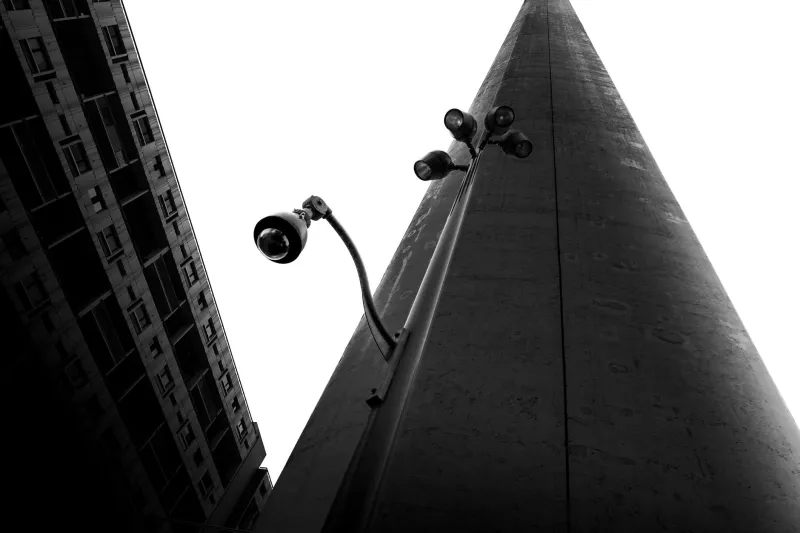
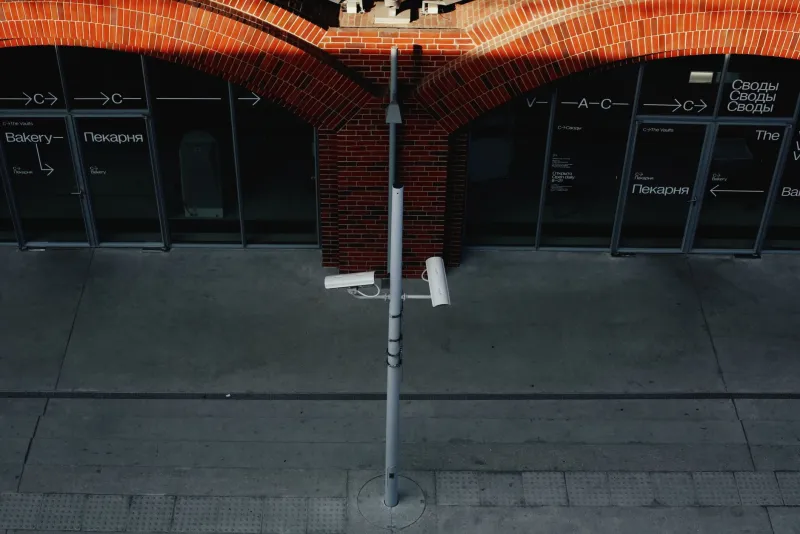
The built environment itself functions as a carceral text. Urban planners and scholars working in the tradition of critical geography have long analyzed how design choices—the placement of walls, the elimination of seating, the strategic deployment of lighting and surveillance infrastructure—encode particular visions of who belongs in public space and who must be managed, redirected, or expelled. Mike Davis's analysis of Los Angeles in City of Quartz (1990) remains a touchstone for understanding how architectural and planning decisions translate class and racial anxieties into the physical organization of urban life.
Contemporary manifestations of this logic are visible in what has been termed "hostile architecture"—the installation of armrests that prevent lying on park benches, spikes embedded in ledges to deter sitting, irregular surfaces designed to prevent skateboarding or gathering. These features are rarely described in explicitly punitive terms; they are presented as aesthetic choices or maintenance solutions. Yet their function is unambiguously disciplinary: they govern the use of shared space by making certain uses physically impossible. The bodies they target are overwhelmingly those already marked as deviant or undesirable by other institutional systems—the unhoused, youth of color, the visibly poor.
Naming the Logic, Contesting the Frame
Critical theory's contribution to these analyses lies not only in diagnosis but in defamiliarization. By identifying the shared conceptual grammar underlying disparate policy domains—the same risk-sorting, the same conditional belonging, the same subordination of care to compliance—critical theorists make visible what institutional fragmentation tends to conceal. The school counselor who files a behavioral incident report, the public health worker who coordinates an encampment sweep, and the urban planner who specifies hostile seating are not, in most self-understandings, participating in a carceral project. They are doing their jobs within the institutional frameworks available to them.
But institutional frameworks are never neutral. They carry the sediment of historical choices about which populations require management and which require support, about which behaviors constitute risk and which constitute rights, about whose presence in public space is presumed legitimate and whose must be earned. Critical theory insists on making those sedimentary choices legible—and on asking who benefits from their continued invisibility.
The work of resistance, in this context, begins with vocabulary. Naming zero-tolerance discipline as a carceral practice, describing encampment sweeps as spatial punishment, analyzing hostile architecture as a form of exclusionary governance—these are not merely rhetorical moves. They are the precondition for imagining policy alternatives organized around a different set of premises: that students require mentorship rather than processing, that unhoused people require housing rather than dispersal, that public space exists for publics rather than for the management of those deemed insufficiently respectable.
The prison's walls, it turns out, are far more permeable than they appear—not because incarcerated people can easily leave, but because the logic that built those walls has long since escaped them.